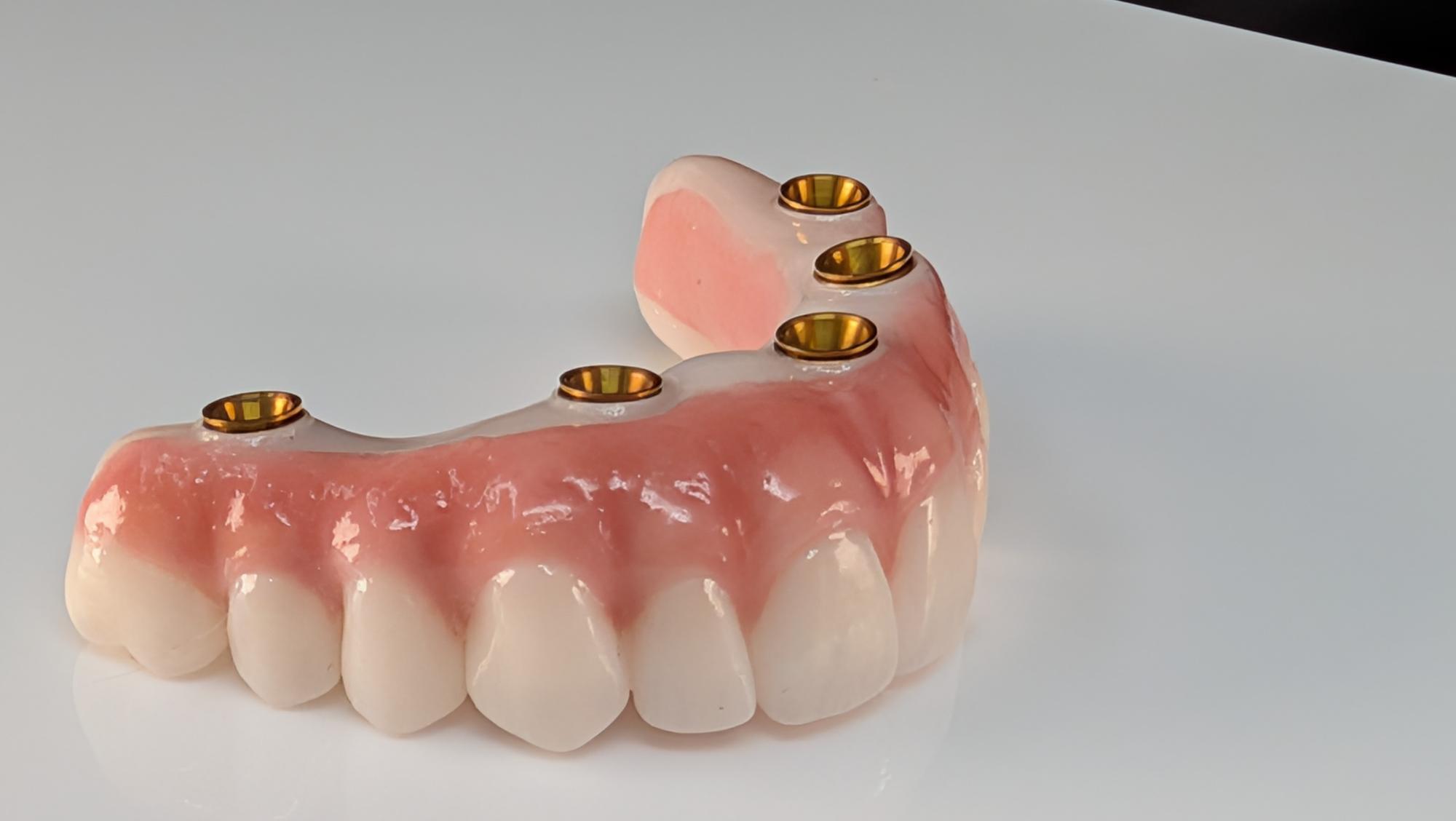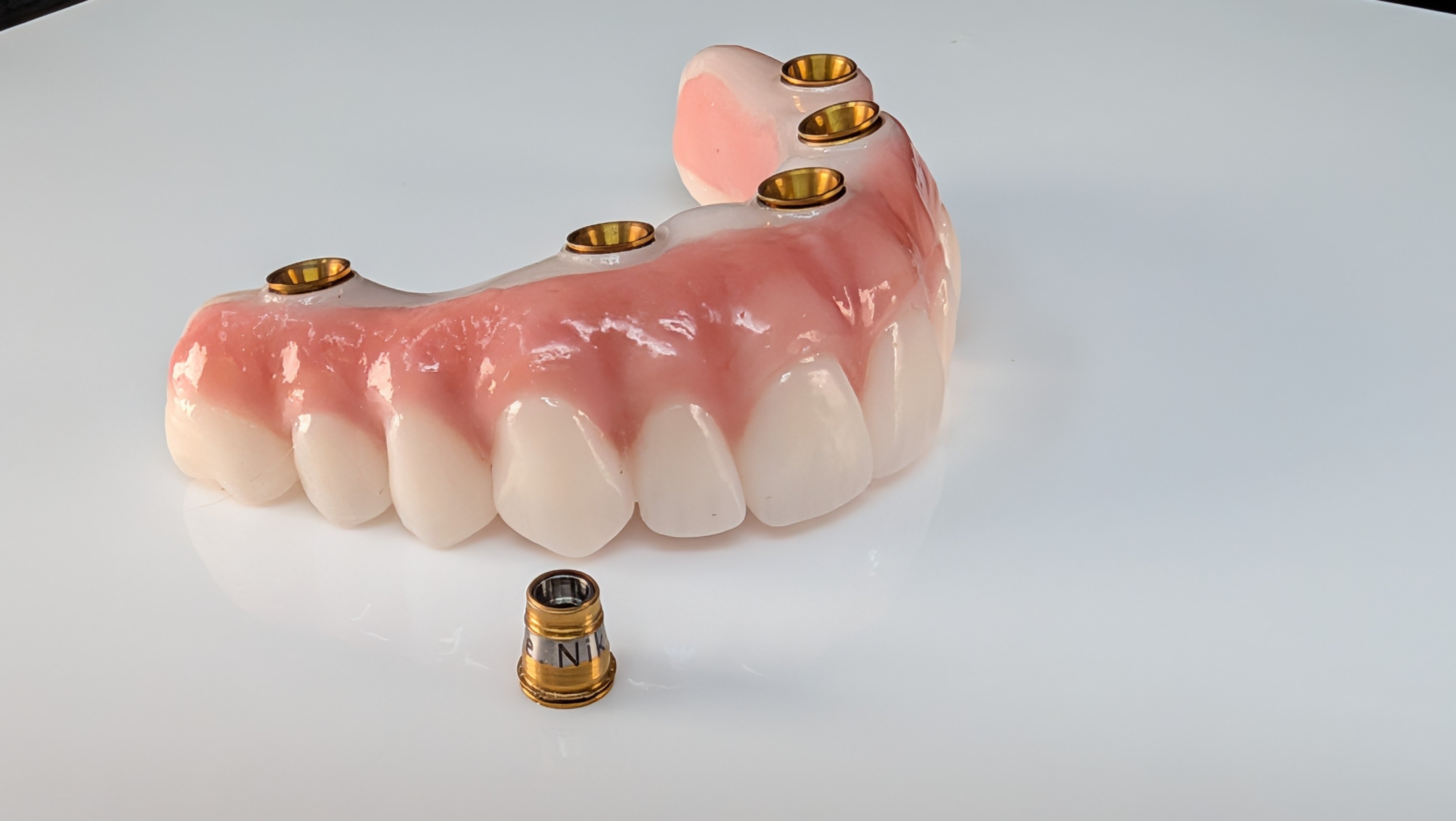
- What is Passivity Plus™?
- When is Passivity Plus™ the right choice, and when isn't it?
- Can Passivity Plus™ be used in special clinical scenarios?
- How does Passivity Plus™ fit into digital workflows?
- What are the components and specifications of Passivity Plus™?
- Is Passivity Plus™ safe, FDA cleared, and easy to maintain?
- What is "cold welding" in Passivity Plus™, and how does it differ from traditional implant-abutment cold welding?
- Home
- Products
- Full-Arch Solutions
- Passivity Plus Technology
Passivity Plus Technology
Lack of Passivity = Stress in Full-Arch
In full-arch implant restorations, achieving true passivity is difficult. From impression capture, scanning, model fabrication, to prosthesis manufacturing, minor discrepancies accumulate at every step. The prosthesis may look perfect, but when seated, it fights against itself.
The consequences are predictable and costly:
Screw Loosening - Non-passive prostheses create constant micro-stress on screws. The result? Repeated loosening, emergency appointments, and frustrated patients questioning their investment.
Prosthesis Fracture - Stress doesn't disappear; it transfers. When forces can't be absorbed by a passive fit, they concentrate in the prosthesis itself, leading to catastrophic failures and expensive remakes.
Bone Loss - The most insidious consequence. Chronic stress on implants accelerates peri-implant bone resorption, threatening the long-term survival of the entire restoration.
Passivity Plus helps elevate existing passivity to a higher level, benefiting both doctor and patient.
ILLUSTRATIVE ANIMATION
Passivity Plus Technology
Clinical Benefits of
Passivity Plus Technology
- True passive fit without compromise - The self-adjusting mechanism automatically compensates for minor misfits during seating.
- Universal workflow compatibility - Works with any record-capture method (scanning, photogrammetry, grammetry, stone models) and any framework material (zirconia, titanium, PMMA, hybrid).
- Decreased prosthesis fracture risk - The self-adjusting mechanism absorbs stress that would otherwise concentrate in the prosthesis framework.
- Fewer remakes and repairs - Cases that fall within normal manufacturing tolerances but would fail passive fit testing with conventional components can proceed successfully.
- Virtual elimination of screw loosening - The 5-degree conical cold-welding mechanism creates a friction-locked connection at 25 Ncm that resists loosening under functional loads.
- Fully reversible and serviceable - The cold weld releases when the screw is loosened, restoring flexibility to the pivotable cap.
- Predictable, repeatable seating protocol - A simple, standardized technique applies to every case: partial engagement of all screws, allow self-adjustment, then final torque in cross-pattern to 25 N·cm.
- No bite opening or occlusal distortion - Micro-scale adjustments, less than 2 degrees, at the micron level, have no clinically significant impact on vertical dimension. The prosthesis seats in its designed occlusal scheme without the distortion that occurs when forcing non-passive frameworks into place.
Passivity Plus Specifications
| Specifications | Details |
|---|---|
| Material | Premium Grade 5 Titanium (Ti-6AL-4V-ELI) |
| Recommended Torque | 25 N·cm |
| Maximum Safe Torque | ~30 N·cm |
| Internal Taper (base) | 5° per side |
| Screw Body Taper | 5° per side (10° total) |
| Screw Body Surface | Smooth (no retention slots) |
| Cold Weld Location | Screw body to internal base walls |
| Key Patent Feature | Washer around screw head |
| Driver Type | 1.25 mm Hex / UniGrip |
| Adjustment Range | <2 degrees; micron-scale movements |
| Total Components | 4 pieces |
| Screw Indication | One-time use (regulatory); durable for 5-10 uses |
| FDA Status | 510(k) cleared, Class II |
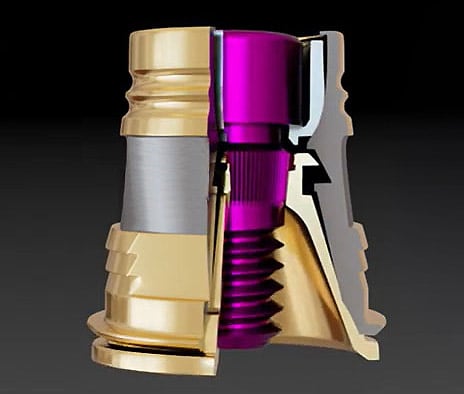
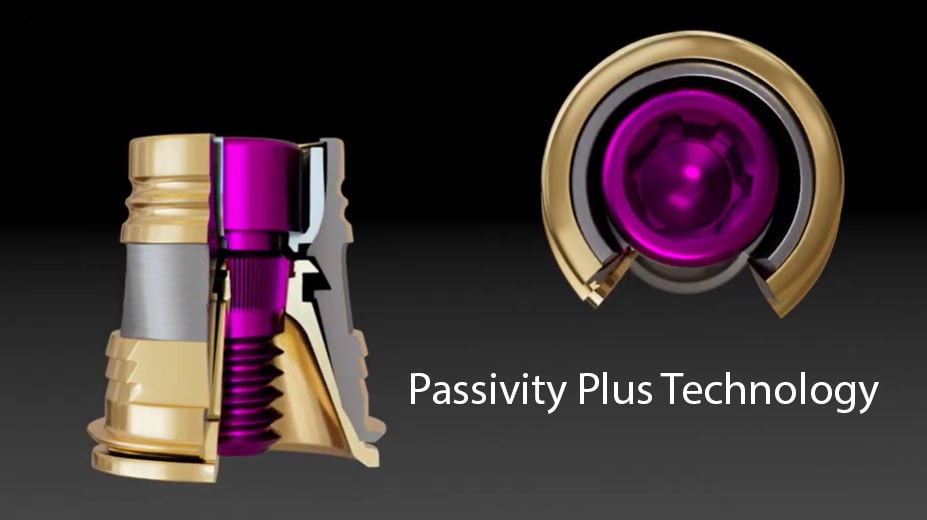
Passivity Plus Componentry
1. External Adjustable Cap
Provides external retention and adhesive bonding.2. Screw Fixation
Screw securing the assembly.
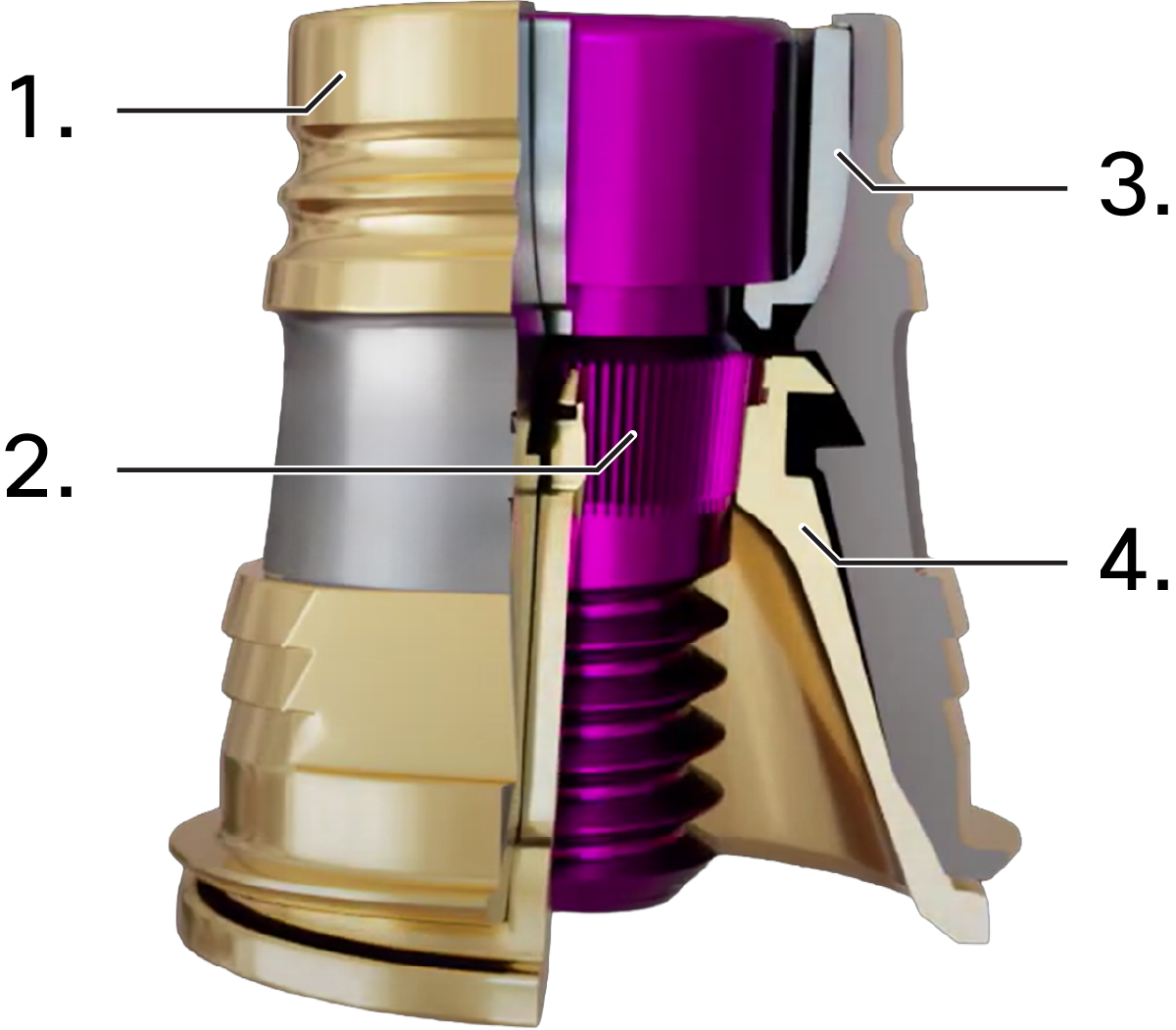
3. Screw Washer
Stabilizes the screw position by compensating for inner component movement, preventing the screw from recentering during function.
4. Inner Cap
Slightly engages within the external cap, creating a fully seated interface between components.Passivity Plus: Frequently Asked Questions
- What is the proper protocol for tightening, removing, and reusing Passivity Plus™ screws?
- What is the patented washer in Passivity Plus™, and how does it create a stress-free passive fit?
- How do the self-adjusting mechanism and screw design work together in Passivity Plus™?
- What is the minimum zirconia thickness required around Passivity Plus™?
- Which MUA systems is Passivity Plus™ compatible with?
Video Resources
Passivity Plus Technology: Relieving the Stress of Full Arch
Broken Finals: Is Passivity Plus Your Coping Mechanism?
Passivity Plus: Ensuring Accuracy Throughout Your Practice
How Passivity Plus Works: Inside The Mechanism
Passivity Plus: Understanding the Seating Protocol
Stacking Tolerances: Know the Obstacles to Passivity
Passivity Plus in Temp Finals
How can we help you today?
Can't find what you're looking for? No problem. Let us help.
ROE’s experts are dedicated to elevating your dental practice.
- Full-service national dental laboratory
- Comprehensive Certified Dental Laboratory (CDL) services
- Case planning support from 20+ Certified Dental Technicians
- Specialists in both fixed, removable, implant and full-arch dentistry
- Tailored support for all cases, from routine to complex
- National Association of Dental Laboratories (NADL) member
- Only FDA-approved materials used
- All products made in the USA
- Thousands of free online education materials