
Overview
A closed-tray impression is a technique that utilizes transfer copings secured to dental implants, where the impression is made with a conventional tray that fully covers the copings. After the impression material sets, the tray is removed while the transfer copings remain attached to the implants. The clinician then unscrews the copings from the implants and reinserts them into their corresponding positions within the impression. This technique captures both the implant positions and natural dentition in a single impression.
Prerequisites
-
Implant is fully integrated
- If multiple implants, they must be sufficiently parallel to each other
Technology & Materials
- IOS scanner or PVS impression material
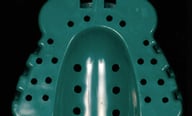
- Stock impression tray
- Adjustment burs/drills
- Screw block-out material
Workflow Steps for Closed-Tray Impression for Crowns
| Step | Instructions | Image |
|
Important: Clinical studies demonstrate superior accuracy of open-tray impressions for capturing multiple non-parallel implants compared to closed-tray techniques. While open-tray procedures involve increased complexity and chairtime, this must be weighed against the enhanced precision needed for complex implant prostheses. Closed-tray impressions are more prone to errors because the copings are not connected together and require making a fit verification jig, necessitating an additional appointment to verify impression accuracy. The process of removing copings from the mouth and placing them back into the impression creates multiple opportunities for mistakes - if the impression post isn’t seated completely or positioned correctly, the resulting restoration may not fit properly. |
||
| 1. |
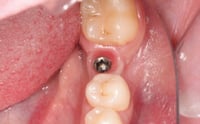
Remove the healing abutment and verify healthy, pink periimplant tissue with no signs of inflammation or recession around the implant platform. |
 |
| 2. |
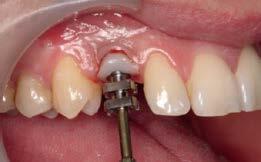
Optional: If your surgeon hasn’t used a custom healing abutment to shape the sulcus to your specifications, this is an optimal time to shape the sulcus using an impression post placed temporarily to form the desired sulcus and neck position of the tooth. |
 |
|
Important: Proper sulcus shaping improves the chances of achieving a hygienic, esthetic implant crown and enhances long-term success by reducing the risk of peri-implantitis from bacterial infiltration around an improperly contoured crown that could cause bone loss. |
||
| 3. |
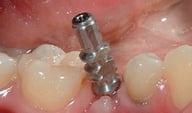
Seat open-tray impression copings on implants and finger-tighten. |
 |
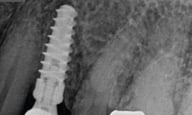
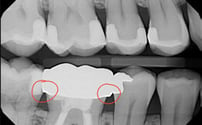
| 4. | Take periapical radiograph to verify complete seating of impression copings on implant platforms. |
 |
|
Important: Taking a periapical radiograph helps both the laboratory and the doctor ensure that impression posts were seated completely. If they weren’t fully seated during the impression, the resulting framework, bridge, or even single crown will not be accurate, leading to incorrect occlusion or contacts. Taking a periapical radiograph to ensure complete seating should be considered a mandatory step for closed-tray or any impression technique. |
||
| 5. |
Apply impression tray adhesive evenly across internal surfaces and borders, allowing proper drying time per manufacturer instructions. |
|
|
Important: Applying tray adhesive is an often overlooked but critical step for ensuring accuracy. Without proper adhesive application or mechanical retention holes in the tray, the impression material can move, slip, and pull away from the tray, immediately making the impression inaccurate. Even minimal movement of half a millimeter or quarter millimeter can cause frameworks or bridges not to fit. Tray adhesive is essential for keeping the impression material securely bonded to the tray throughout the procedure. |
||
| 6. |
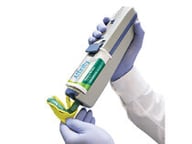
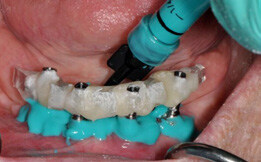
Load heavy-body material into tray while simultaneously syringe light-body material around implant copings and gingival margins for detailed tissue capture. |
|
| 7. | Seat loaded tray and clear excess material from coping access holes, ensuring guide pins remain accessible; protect screw channels with wax or cotton pellets. | 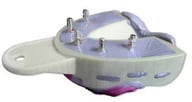
|
| 8. |
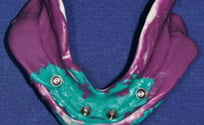
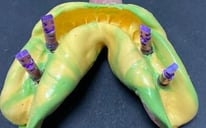
After complete polymerization, remove impression, then unscrew the impression copings and insert with an analog back into the impression. |
 |
| 9. |
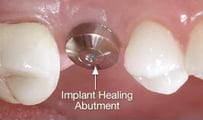
Place healing abutments or interim crowns immediately to maintain soft tissue architecture, particularly critical in esthetic zones. |
|
| 10. |
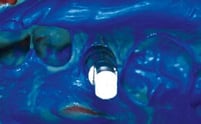
Attach analogs to impression copings and seat into the closedtray impression site. |
 |
| 11. |
Check thoroughly for voids around coping margins and verify complete stability of all impression copings before sending to the lab. If any mobility or defects are detected, the impression must be retaken. |
|
| 12. |
Send completed impression with attached analogs, opposing model, bite registration, and shade selection to laboratory for fabrication. |
|
Additional Resources
For more information concerning Crown & Bridge Solutions:
- Fixed Restorations Product Page
- Crown & Bridge Solutions - Your Guide to ROE's Fixed Restorations
- More Crown & Bridge Workflow's
Contact Information
For help with Crown & Bridge Solution's for your next case, contact ROE Dental Laboratory:
- Phone: (216) 663-2233
- Email: info@roedentallab.com